
About dental implants
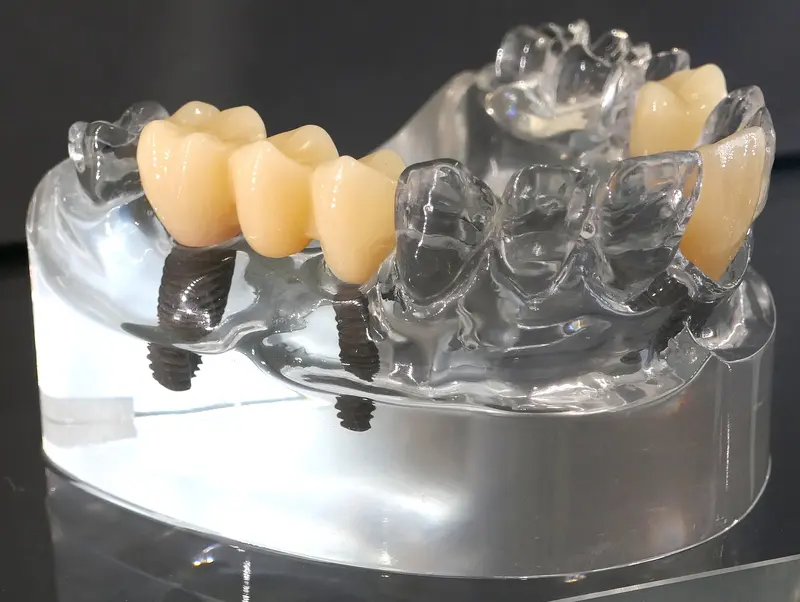
A dental implant is a small titanium screw placed into the jawbone, where it acts as an artificial tooth root. Once it has healed and bonded with the bone, it can support a single crown, a bridge or a denture.
Implants are designed to look, feel and work like natural teeth, and they do not rely on neighbouring teeth for support. But they involve minor surgery, take months to complete, and need a healthy mouth and enough suitable bone.
The NHS says implants are usually only available privately and are expensive. Implants that are well cared for often last a very long time, but there is no lifetime guarantee - plaque around an implant can cause an infection called peri-implantitis that can lead to the implant loosening.
How it works
- Consultation: examination of your mouth and the health and strength of your jawbone, and a written treatment plan with costs
- The titanium implant is placed into the jawbone under local anaesthetic
- The implant is left to heal and bond with the bone - usually around four months
- A crown, bridge or denture is attached to the healed implant
- In some cases a replacement tooth can be attached on the same day
Time, lifespan and cost
- Time needed
- Usually several months from placement to the final tooth - healing typically takes around four months, although same-day teeth are sometimes possible.
- How long it lasts
- Implants that are well cared for often last a very long time, but there is no lifetime guarantee.
- On the NHS?
- Sometimes on the NHS. The NHS says implants are usually only available privately. Rarely, they are provided on the NHS for people who cannot wear dentures for particular reasons, such as mouth cancer or an accident. NHS charges
Private cost
Private fees vary widely between practices and depend on the complexity of your case and the materials used, so we do not quote a typical price. Always ask for a written treatment plan with costs before you agree to treatment. (Source: NHS: Dental treatments)
Pros and cons
Pros
- Fixed in place and feels like a natural tooth
- Does not require cutting down neighbouring teeth
- Can replace one tooth, several, or support a full set
- Can make dentures much more stable
- Can last a very long time with good care
Cons
- Involves surgery and several months of treatment
- Usually private and expensive
- Needs enough healthy jawbone and good gum health
- Requires meticulous cleaning and regular reviews for life
Aftercare
- Brush twice a day with fluoride toothpaste and clean around the implant daily with interdental brushes
- Attend regular dental and hygiene appointments so the implant can be checked
- Do not smoke - smoking is a risk factor for gum disease
- If you are considering treatment abroad, read the General Dental Council's advice first
Risks and side effects
- Peri-implantitis - red, sore, swollen or bleeding gums around the implant caused by plaque, which can lead to infection and loosening or loss of the implant
- As with any surgical procedure there are risks; your implant dentist should explain the benefits, risks and alternatives before you decide
Your dentist should explain the risks that apply to you before you agree to treatment.
Problems it can help with
A tooth that has broken badly - especially after an accident - needs prompt dental care. What to do right now and what treatment may follow.
Gaps between teeth can be harmless, a sign of missing teeth, or occasionally a sign of gum disease. How to tell and what can close them.
An adult tooth knocked out can often be saved if you act within the hour. Step-by-step first aid, plus what happens at the dentist.
Gaps from lost teeth can affect eating, speech and confidence. Compare dentures, bridges and implants, and why the gap itself matters.
Compare it with the alternatives
Implants vs bridges vs dentures
The three main ways to replace missing teeth compared: fixed or removable, effect on other teeth, treatment…
Common questions
Can I get implants on the NHS?
Rarely. The NHS says they are sometimes available for patients who cannot wear dentures for reasons such as mouth cancer or an accident; otherwise they are private.
Are implant teeth hard to clean?
Not especially. Cleaning is similar to natural teeth, with extra care around the implant using interdental brushes. Your dental team will show you how.
Is it safe to have implants abroad?
The General Dental Council advises researching whether the country has a dental regulator, asking detailed questions about qualifications, aftercare and who pays if things go wrong, and speaking to your own dentist before you go.
Useful at home
Products that can help with day-to-day care alongside this treatment. Ask your dental team what suits you. Some links may be affiliate links.
TePe Bridge & Implant Floss
Pre-cut spongy floss with stiff ends that thread under wires, bridges and around implants – handy for anyone with fixed braces.
TePe Compact Tuft
A single-tuft brush for precision cleaning where a normal brush struggles – around brackets, along the gumline, crowded teeth…
TePe Interdental Brush Original (mixed pack)
Classic straight interdental brushes in colour-coded sizes. A mixed pack is a practical way to find which sizes suit your gaps –…
Waterpik Cordless Advanced water flosser
A rechargeable, cordless water flosser that is easier to store and travel with than a countertop unit, at the cost of a smaller…
Sources we used
- Oral Health Foundation: Dental implants
- NHS: Dental treatments
- NHS: Dentures (false teeth)
- General Dental Council: Going abroad for dental treatment
Checked September 2026. Guidance changes, so always follow the advice of your own dental team. About our sources.