
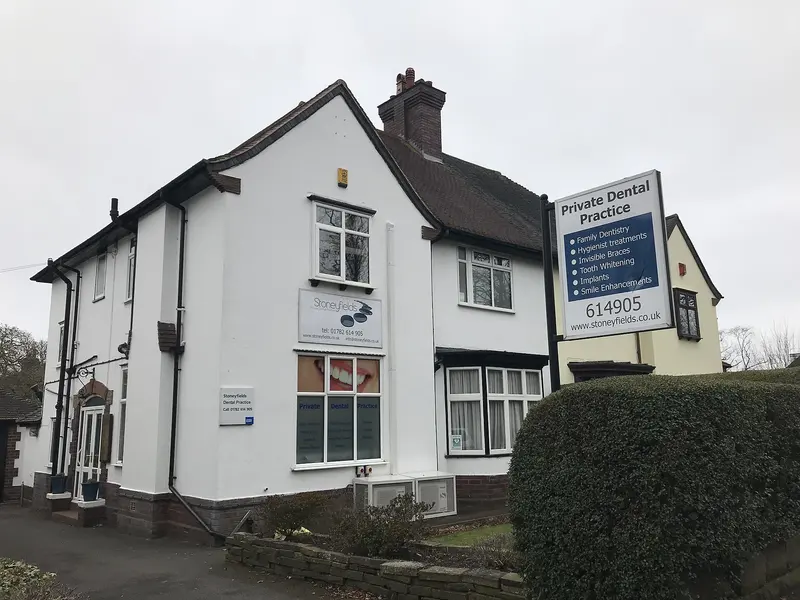
Many practices offer both NHS and private care, and it isn't always obvious what you are signing up for. Neither route is automatically better: the NHS provides the treatment you clinically need, while private care mainly adds choice – of materials, appointment times and cosmetic options – at a higher price.
Charges and rules differ between England, Scotland, Wales and Northern Ireland, so check the section for where you live.
What the NHS covers
The NHS provides clinically necessary treatment to keep your mouth, teeth and gums healthy, based on your dentist's assessment. That includes check-ups, fillings, root canal treatment, extractions, gum treatment, crowns, bridges and dentures. Cosmetic treatments such as teeth whitening usually have to be paid for privately, and dental implants and veneers are usually private too, apart from specific clinical circumstances.
Some choices are about materials. The NHS says white fillings are available when clinically necessary – on front teeth, for example – but on back teeth a silver-coloured amalgam filling may be the more effective option. You may be offered a metal-coloured crown on a back tooth. If you would prefer something different, your dentist can explain private options, costs, risks and benefits.
How NHS charges work in England
In England NHS treatment is grouped into three charge bands, and you pay one charge per course of treatment for the highest band you need. From April 2026 the charges are £27.90 for Band 1 (check-ups, X-rays, simple scaling), £76.60 for Band 2 (fillings, root canal treatment, extractions) and £332.10 for Band 3 (crowns, dentures, bridges and similar lab work). Urgent treatment is £27.90.
If you need Band 2 or Band 3 treatment, or a mix of NHS and private care, your dentist has to give you a written treatment plan with the costs. If you need more treatment in the same or a lower band within two months, you should not have to pay again.
Scotland, Wales and Northern Ireland
- Scotland: NHS dental examinations are free for everyone. Adults who pay contribute 80% of the cost of treatment, up to a maximum of £384 per course of treatment, and treatment is free for everyone under 26.
- Wales: the Welsh Government replaced bands with fixed-price care packages in 2026 – for example £25 for a recall check-up and £37.50 for urgent care, with a maximum of £384 for a course of treatment. Examinations are free for under-25s and people aged 60 or over.
- Northern Ireland: patients who pay contribute 80% of the fee, up to £384 per course of treatment. Some items, such as denture repairs and stopping bleeding, are free for everyone.
NHS inform: NHS dental treatment in Scotland GOV.WALES: dental charges and exemptions HSC Business Services Organisation: NI dental charges
Why people choose private care
Which? notes that private appointments are generally given more time and may be available in the evenings or at weekends. Private care can also offer a wider range of materials – for example tooth-coloured fillings on back teeth or all-ceramic crowns – and cosmetic treatments the NHS does not provide.
Private prices are set by each practice and vary widely, and Which? found they tend to be higher where property costs and wages are higher, such as London and the South East. Prices are often advertised as 'from' figures, so always get a written, itemised estimate before you commit. Our costs page shows examples of published starting prices.
Mixing NHS and private treatment
You can usually combine the two. In England your dentist must make clear which treatments can be provided on the NHS and which only privately, with the costs of each, and any private choices should appear on your treatment plan. NHS inform gives the example of having NHS root canal treatment with a private white filling on the same tooth in Scotland.
What an NHS dentist in England should not do
The NHS lists several things you should not be asked to do. If any of these happen, you can raise it with the practice or through the NHS complaints process.
- Charge a deposit before assessing your mouth or checking your symptoms.
- Ask you to pay privately for an appointment to see whether you will be accepted as an NHS patient.
- Ask you to become a private patient so that your child can get NHS treatment.
- Charge a fee for missing an NHS appointment (although you may have to pay again for a new course of treatment).
Spreading the cost of private care
Which? describes several options: paying per appointment, monthly dental payment plans that cover check-ups and hygiene visits, dental insurance, and finance arranged through the practice. Terms, exclusions and interest rates vary, so read the details carefully and consider independent financial guidance before taking out credit.
Common questions
Is private dental treatment better quality than NHS treatment?
Not necessarily. NHS and private dentists are registered with the same regulator, the General Dental Council. Private care mainly offers more choice of materials, time and cosmetic options. Which? notes that labs making NHS crowns and dentures often make private work too, and differences are largely cosmetic.
Can I have NHS treatment and private treatment at the same practice?
Yes, many practices offer both. Your dentist should explain which parts are NHS and which are private and include the costs in your treatment plan.
Who gets free NHS dental treatment in England?
Among others: under-18s, under-19s in full-time education, people who are pregnant or had a baby in the last 12 months, and people receiving certain benefits. See our costs page for more detail.
Is a scale and polish free on the NHS?
In England, scaling is included in Band 1 if your dentist says it is clinically needed. If it is not clinically necessary, you would have to pay privately.
How do I complain about private dental treatment?
Start with the practice. For private care the NHS points to the General Dental Council's information on the complaints process for private dental treatment.
Sources we used
- NHS: Dental services available on the NHS
- NHS: Dental treatments
- NHS: How much NHS dental treatment costs
- NHS: What happens when you visit an NHS dentist
- NHS: Who can get free NHS dental treatment
- NHS: Dental services
- General Dental Council: What the law says
- NHS inform: Receiving NHS dental treatment in Scotland
- NHS National Services Scotland: Do I pay for dental examinations?
- GOV.WALES: NHS dental charges and exemptions
- HSC Business Services Organisation: Dental charges and fees
- Which?: Private vs NHS dental charges
Checked September 2026. Guidance changes, so always follow the advice of your own dental team. About our sources.