
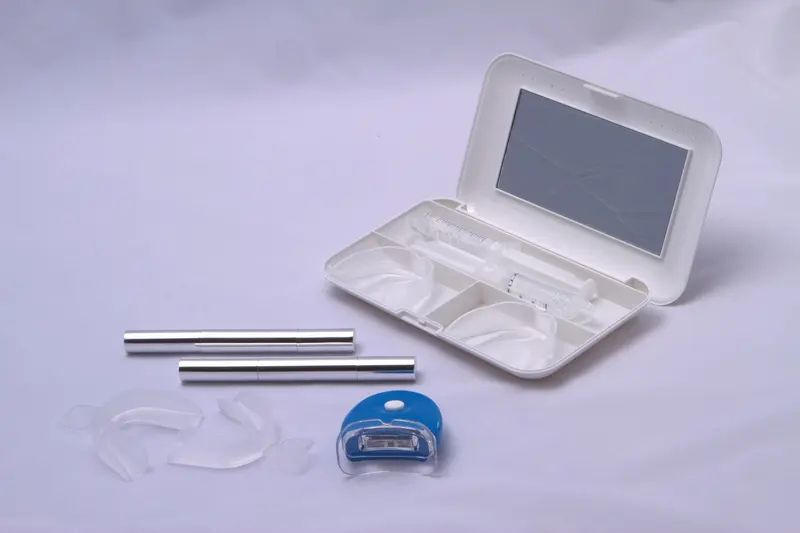
About teeth whitening
Professional teeth whitening lightens the natural colour of your teeth using a peroxide-based gel. It can be done at home with custom-made trays prescribed by your dentist, or in the dental surgery, sometimes with a light or laser to speed things up.
In the UK, whitening is the practice of dentistry. It can only legally be carried out by a registered dentist, or by a dental hygienist, dental therapist or clinical dental technician working to a dentist's prescription. Products stronger than 0.1% hydrogen peroxide may only be supplied to dental professionals, may be used only in people over 18 after a dental examination, and must first be applied by, or under the direct supervision of, the dental team. Whitening in beauty salons is illegal and unsafe.
Whitening only works on natural teeth - not fillings, crowns, veneers, dentures or implants - and it is not permanent. It is not done if you are under 18 or have unhealthy teeth or gums, and the NHS says it is not recommended during pregnancy or breastfeeding.
How it works
- A dental examination to check your teeth and gums are healthy and whitening suits you
- Home whitening: moulds are taken and thin custom trays made; you apply the gel to the trays and wear them for a set time as instructed
- In-surgery whitening: your gums are protected, the gel is applied and a light or laser may be used
- A review to check the result and any side effects
Time, lifespan and cost
- Time needed
- Home whitening with trays usually takes around 2 to 6 weeks according to the NHS (the Oral Health Foundation says 1 to 2 weeks is typical); in-surgery laser whitening usually takes one appointment of about 1 to 2 hours.
- How long it lasts
- Not permanent. The NHS says results may last around 3 years if you follow your dentist's advice; smoking, tea, coffee and red wine can bring staining back sooner.
- On the NHS?
- Usually private only. Teeth whitening is cosmetic and not available on the NHS - you pay privately at a dental practice. NHS charges
Private cost
From £570 for a take-home kit
Take-home whitening kit from £570 (Bupa Dental Care London Bank). Whitening is not available on the NHS and must be carried out by a registered dental professional.
Published starting prices from individual practice price lists, checked September 2026. These are not averages and your quote could be higher. Sources: Bupa Dental Care London Bank: Treatment prices, NHS: Teeth whitening, General Dental Council: What the law says.
Private fees vary widely between practices and depend on the complexity of your case and the materials used, so we do not quote a typical price. Always ask for a written treatment plan with costs before you agree to treatment. (Source: NHS: Teeth whitening)
Pros and cons
Pros
- Can noticeably lighten natural teeth
- Home trays can be kept and reused for top-ups if your dentist advises
- In-surgery whitening is quicker
Cons
- Not available on the NHS
- Not permanent - staining returns over time
- Does not change the colour of crowns, veneers or fillings
- Temporary sensitivity and gum irritation are common
- Not for under-18s, or during pregnancy or breastfeeding
Aftercare
- Use a sensitive toothpaste if your teeth feel sensitive during treatment
- Follow your dentist's instructions on how long to wear trays
- Cut down on smoking, tea, coffee and red wine to help the result last
- Report any side effects that bother you to your dentist
Risks and side effects
- Temporary sensitivity to cold or sweet foods
- The General Dental Council notes whitening can permanently alter the structure of your teeth, which is why it should only follow a proper assessment by a registered dentist
- Sore gums or throat, or white patches on the gums
- Harm to teeth and gums from illegal, unregulated or over-strength products
Your dentist should explain the risks that apply to you before you agree to treatment.
Problems it can help with
Teeth darken with age, tea, coffee, red wine and smoking. What professional cleaning, whitening and other options can - and can't - do.
Common questions
Can I buy effective whitening kits online?
Legally, over-the-counter whitening products in the UK can contain only up to 0.1% hydrogen peroxide, which the Oral Health Foundation says is too low to make a noticeable difference. Do not buy products that claim higher strengths.
Is salon whitening legal?
No. The General Dental Council says only registered dentists, or hygienists, therapists or clinical dental technicians working to a dentist's prescription, can legally provide it. Insurance cannot make illegal whitening legal.
How do I check someone is registered?
Search the General Dental Council's online register by name.
Will whitening work on my crowns?
No. Whitening only lightens natural teeth; existing crowns, veneers and fillings stay the same colour.
Useful at home
Products that can help with day-to-day care alongside this treatment. Ask your dental team what suits you. Some links may be affiliate links.
Oral-B 3D White Advanced Express Whitening toothpaste
A whitening toothpaste that works by removing surface stains – it won't change the natural colour of your teeth or lighten…
Sensodyne Pronamel Gentle Whitening toothpaste
A whitening toothpaste aimed at people with acid wear or sensitive teeth. As with all shop-bought whitening products, expect…
Sources we used
- NHS: Teeth whitening
- Oral Health Foundation: Tooth whitening
- Oral Health Foundation: Safe Smiles: tooth whitening and the law
- General Dental Council: Tooth whitening and illegal practice
- General Dental Council: Search the register
- NHS: Dental treatments
- Bristol Dental School: Tooth whitening
- Bupa Dental Care London Bank: Treatment prices
- General Dental Council: What the law says
Checked September 2026. Guidance changes, so always follow the advice of your own dental team. About our sources.