
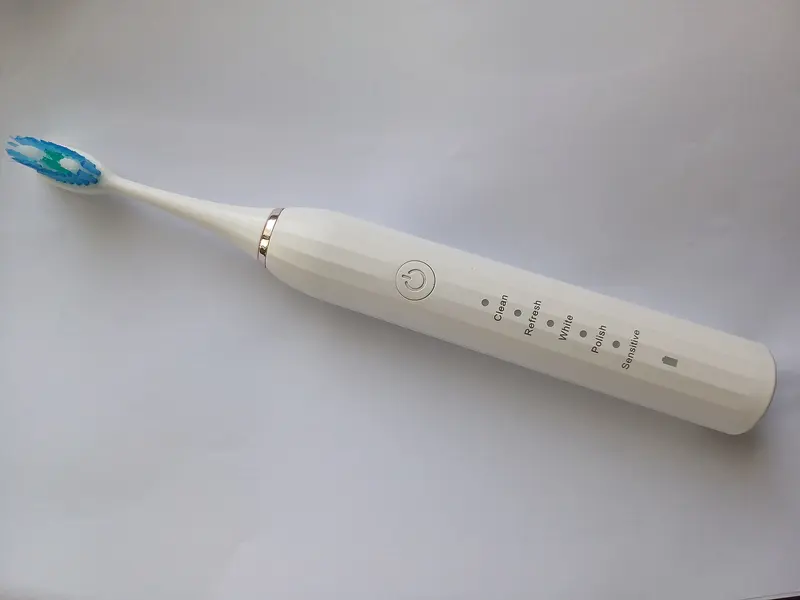
Electric toothbrushes range from simple models to app-connected flagships, and the marketing can make it hard to tell what matters. The short answer: a basic brush used well twice a day beats an expensive one used badly.
This guide explains what independent evidence shows, then walks through the features that genuinely help.
Do you need one at all?
The NHS says electric and manual brushes are equally good as long as you clean all surfaces of your teeth and use fluoride toothpaste, though some people find an electric brush makes thorough cleaning easier. The Oral Health Foundation adds that electric brushes can be easier for people with limited hand movement.
What the research shows
A 2014 Cochrane review pooled 56 trials with 5,068 participants. Compared with manual brushes, powered brushes reduced plaque by 11% after one to three months and by 21% after three months, and reduced gum inflammation by 6% and 11% over the same periods. The reviewers rated the evidence as moderate quality and said the benefit for long-term dental health is unclear.
Most of the evidence in that review came from rotation-oscillation brushes, which showed a clear benefit at both time points.
Oscillating-rotating or sonic?
The Oral Health Foundation describes two main types. Oscillating-rotating brushes have a small round head that turns back and forth. Sonic brushes use rapid vibrations of a more traditional-shaped head and can feel different at first. It says both types can clean teeth well when used properly.
Features worth having
- A pressure sensor that warns you when you press too hard – brushing too hard can damage teeth and gums.
- A two-minute timer, ideally with a 30-second prompt to move to the next part of your mouth.
- Soft brush heads, which the Oral Health Foundation says are usually best, especially for sensitive teeth and gums.
- Battery life that suits your routine; the Oral Health Foundation says most brushes last around two to three weeks on a charge.
Features that are nice but optional
Extra modes (whitening, gum care, sensitive), Bluetooth apps, travel cases and charging stands can be pleasant, but the Oral Health Foundation says a basic daily clean mode is enough for most people and app features are helpful rather than essential.
Think about running costs
Brush heads need replacing every three months, or sooner if the bristles splay, so check the price and availability of replacement heads before you buy. Heads are usually specific to a brand and sometimes to a range – Oral-B, for example, says its iO handles only take iO heads.
Braces, crowns and other dental work
If you wear braces or have crowns, veneers or implants, ask your dentist or orthodontist which brush and head type they recommend. Some manufacturers make specific claims about suitability for dental work; your dental team can tell you whether that applies to you.
Common questions
Is a more expensive electric toothbrush better?
Not necessarily. Higher-priced models mainly add modes, apps and accessories. The Oral Health Foundation says the best toothbrush is the one you will use properly every day.
How long should I brush with an electric toothbrush?
Two minutes, twice a day – the same as with a manual brush.
How do I use an electric toothbrush properly?
Place the head at an angle where teeth meet gums, guide it slowly from tooth to tooth and let it do the work rather than scrubbing. Clean all surfaces of every tooth.
Can children use electric toothbrushes?
Many brands make children's models. Children need help or supervision with brushing until at least 7, whichever brush they use.
How often should I change the brush head?
Every three months, or sooner if the bristles become splayed.
Sources we used
- NHS: How to keep your teeth clean
- NHS: Children's teeth
- Oral Health Foundation: Electric toothbrushes
- Cochrane: Powered versus manual toothbrushes
- Oral-B iO2 (Oral-B UK)
Checked September 2026. Guidance changes, so always follow the advice of your own dental team. About our sources.