
Brushing cleans the surfaces you can see, but plaque also builds up in the narrow gaps between teeth and just under the gumline, where bristles struggle to reach. Cleaning between your teeth once a day is how you get at it.
There is no single right tool. Floss, interdental brushes and water flossers all have a place, and the best one is the one you will actually use every day.
Why it's worth the effort
The NHS says regular flossing may reduce gum disease, tooth decay and bad breath by removing plaque that forms along the gumline. The Oral Health Foundation recommends cleaning between your teeth every day for the same reasons.
What the evidence says
A 2019 Cochrane review looked at 35 studies involving 3,929 adults. It found that floss used alongside brushing may reduce gum inflammation, and that interdental brushes may reduce both gum inflammation and plaque in the short term. Interdental brushes may be better than floss for gum inflammation.
The reviewers rated the evidence as low to very low certainty, and most studies were short. So interdental cleaning is sensible and widely recommended, but the size of the benefit is not precisely known.
How to use interdental brushes
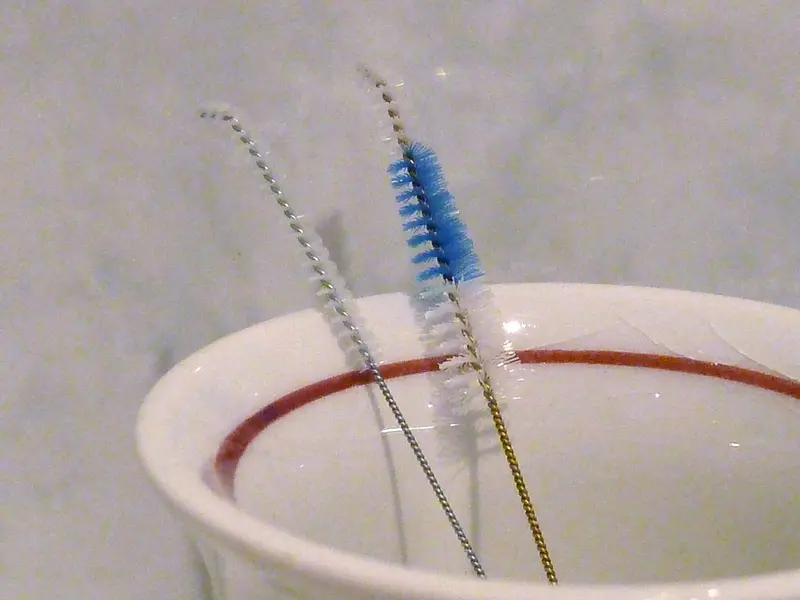
Interdental brushes are small brushes that slide into the gaps between teeth. Many people find them easier than floss, especially where gaps are wider.
- Use them once a day.
- Ask your dentist or hygienist which sizes fit your gaps – you may need more than one size.
- Hold the brush gently and guide it between the teeth without forcing it.
- If the wire bends or the bristles splay, try a smaller size.
- Rinse the brush as you go and replace it when it looks worn.
How to floss
Floss is useful for tight contacts where a brush will not fit.
- Take roughly 30 to 45cm of floss or tape and wind most of it around a finger on each hand, leaving a short section taut between them.
- Ease it between two teeth with a gentle back-and-forth motion – don't snap it down onto the gum.
- At the gumline, curve it into a C-shape around one tooth and slide it gently up and down.
- Repeat on the neighbouring tooth, then move on, remembering the back of the last tooth on each side.
Where water flossers fit in
A water flosser sprays a thin jet of water between the teeth and along the gumline. The Oral Health Foundation says some people find them easier than string floss, particularly if they have braces, bridges, implants or limited hand movement.
They are an extra, not a replacement. The Oral Health Foundation points out that brushes and floss physically scrape plaque from the tooth surface in a way water alone cannot always manage, and the Cochrane review found only short-term evidence that water flossing reduces gum inflammation.
Before or after brushing?
The NHS says it is best to floss before brushing, and the Oral Health Foundation notes that doing it first helps fluoride toothpaste reach between the teeth.
Bleeding and what to avoid
Some mild bleeding is common when you first start and usually settles with regular cleaning, according to the Oral Health Foundation. If it carries on, speak to your dental team.
The NHS advises against using wooden toothpicks to dig out trapped food, as they can damage your gums and lead to infection.
Common questions
Do I need to floss if I use an electric toothbrush?
Yes. Any toothbrush has trouble reaching the gaps between teeth, which is why the NHS recommends daily cleaning between teeth with floss or interdental brushes as well as brushing.
Floss or interdental brushes – which is better?
Research suggests interdental brushes may be slightly better for gum inflammation where they fit, but floss is useful for tight gaps. Many people use both. Your dental team can advise on what suits your mouth.
Can a water flosser replace floss?
The Oral Health Foundation describes water flossers as a useful extra rather than a replacement for brushing and other interdental cleaning.
How do I clean between teeth with braces?
The NHS advises using an interdental brush to clean between your teeth and underneath your braces every day. Threader-style floss and water flossers can also help; ask your orthodontist.
My gums bleed when I floss. Should I stop?
Not usually. Mild bleeding often improves with regular gentle cleaning. If it continues, or your gums are sore or swollen, see your dentist or hygienist.
Sources we used
- NHS: How to keep your teeth clean
- NHS: Braces
- Oral Health Foundation: Cleaning between your teeth
- Oral Health Foundation: Water flossers
- Cochrane: Cleaning between the teeth
Checked September 2026. Guidance changes, so always follow the advice of your own dental team. About our sources.