
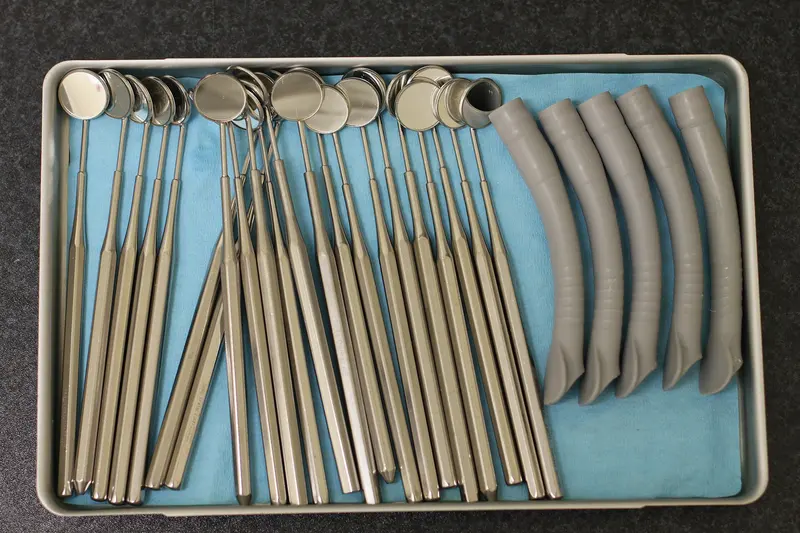
About scale and polish
A scale and polish is a professional clean, usually by a dental hygienist or dental therapist. Scaling removes plaque and hardened plaque (tartar or calculus) that has built up on the teeth, and polishing removes surface stains.
Hygienists and therapists focus on preventing problems and caring for your gums. As well as cleaning, they show you how to clean your teeth and gums properly at home and can advise on diet and reducing your risk of decay - which matters because home care makes the biggest difference to gum health between visits.
On the NHS, scaling is provided when a dentist decides it is clinically needed - for example, to manage gum disease. A scale and polish purely to freshen up healthy teeth is not clinically necessary and is paid for privately.
How it works
- Your gums and teeth are checked
- Plaque and tartar are carefully removed from the tooth surfaces
- The teeth are polished to remove surface stains
- You are given personalised advice on brushing and cleaning between your teeth
Time, lifespan and cost
- Time needed
- Usually a single appointment. How often you need one depends on your gum health and your dental team's advice.
- How long it lasts
- Plaque starts to build up again straight away, so results depend on daily brushing and cleaning between the teeth.
- On the NHS?
- Sometimes on the NHS. When a dentist says scaling is clinically needed it can be done on the NHS, usually as part of Band 1 (£27.90 from 1 April 2026); extensive treatment for complex gum problems may be Band 2. If it is not clinically necessary, you will need to pay privately. NHS charges
Private cost
From £45 to from £179 per hygiene appointment
From £45 (hygiene appointment with dentist, Bupa Dental Care Brigg); from £77 (mydentist myoptions, England/Wales price list); from £179 (hygienist, Bupa Dental Care London Bank).
Published starting prices from individual practice price lists, checked September 2026. These are not averages and your quote could be higher. Sources: Bupa Dental Care Brigg: Treatment prices, mydentist: myoptions private dental care price list, Bupa Dental Care London Bank: Treatment prices.
Private fees vary widely between practices and depend on the complexity of your case and the materials used, so we do not quote a typical price. Always ask for a written treatment plan with costs before you agree to treatment. (Source: NHS: How much NHS dental treatment costs)
Pros and cons
Pros
- Removes tartar that brushing cannot shift
- Helps control gingivitis and gum disease
- Removes surface stains from tea, coffee, red wine and smoking
- A chance for tailored cleaning advice
Cons
- Gums may feel sore for a few days afterwards, especially after more extensive cleaning
- Only covered by the NHS when clinically needed
- Does not change the natural colour of teeth - that needs whitening
Aftercare
- Keep brushing twice a day with fluoride toothpaste, and clean between your teeth daily
- Some gum tenderness should settle within a few days
- Return at the interval your dental team recommends
Risks and side effects
- Temporary sensitivity or gum soreness
Your dentist should explain the risks that apply to you before you agree to treatment.
Problems it can help with
Bad breath (halitosis) is very common and usually fixable at home. The main causes, what actually helps, and when to see a dentist or GP.
Bleeding, swollen gums are the classic early sign. Gum disease is common and preventable - here is how it progresses and how it is treated.
Teeth darken with age, tea, coffee, red wine and smoking. What professional cleaning, whitening and other options can - and can't - do.
Common questions
How often should I see the hygienist?
It depends on your gum health. Your dental team will recommend an interval based on your needs.
Is a scale and polish free on the NHS?
Only if your dentist says it is clinically needed; it is then usually part of the Band 1 charge. Otherwise it is private.
Can a hygienist whiten my teeth?
A hygienist can polish away surface stains, and can carry out tooth whitening only on a dentist's prescription.
Sources we used
- NHS: How much NHS dental treatment costs
- NHS dental charges from 1 April 2026 (poster, PDF)
- NHS: Dental treatments
- Oral Health Foundation: Visiting a dental hygienist or therapist
- Oral Health Foundation: Gum disease
- Bristol Dental School: Periodontal disease
- Bupa Dental Care Brigg: Treatment prices
- mydentist: myoptions private dental care price list
- Bupa Dental Care London Bank: Treatment prices
Checked September 2026. Guidance changes, so always follow the advice of your own dental team. About our sources.