
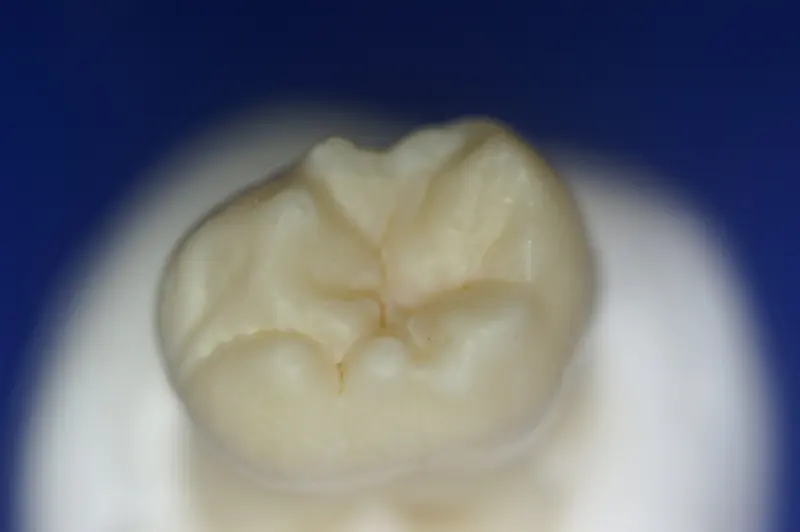
About fluoride treatments and fissure sealants
Fluoride strengthens tooth enamel, helps repair early damage and makes teeth more resistant to acid. As well as fluoride toothpaste, your dental team can paint fluoride varnish onto the teeth, and dentists can prescribe higher-strength toothpaste for people at higher risk of decay: 2,800ppm (for ages 10 and over) or 5,000ppm (for ages 16 and over), used for example with frequent decay, gum recession or a dry mouth.
Cochrane reviews support these measures. Fluoride varnish was linked to an average 43% reduction in decayed, missing and filled permanent tooth surfaces in children and adolescents (moderate-quality evidence), and resin sealants reduced decay in children's back teeth compared with no sealant.
Fissure sealants are thin plastic coatings painted onto the grooves of the back adult teeth, usually soon after they come through - around age 6 for the first permanent molars and between 11 and 14 for the second. Placing them is quick and painless, with no drilling or injections.
How it works
- Fluoride varnish: the teeth are dried and the varnish is painted on
- Sealants: the tooth is cleaned, prepared with a special solution and dried
- The liquid sealant is painted into the grooves and hardened with a light
- High-fluoride toothpaste: prescribed by your dentist and used in place of your normal toothpaste
Time, lifespan and cost
- Time needed
- A few minutes per tooth for sealants; fluoride varnish takes a few minutes at a routine visit.
- How long it lasts
- Your dentist will check sealants at routine visits. Fluoride varnish is reapplied at intervals your dental team recommends.
- On the NHS?
- Available on the NHS. Applying fluoride is part of Band 1 NHS treatment in England (£27.90 from 1 April 2026) and sealants are listed under Band 2, unless you are exempt. NHS dental care is free for under-18s. NHS charges
Private cost
Private fees vary widely between practices and depend on the complexity of your case and the materials used, so we do not quote a typical price. Always ask for a written treatment plan with costs before you agree to treatment. (Source: NHS: How much NHS dental treatment costs)
Pros and cons
Pros
- Quick and painless
- Can help reverse very early decay
- Good evidence for preventing decay, especially in children
- Fluoride varnish and sealants are available on the NHS
Cons
- Sealants only protect the biting surfaces - the rest of the tooth can still decay
- Too much fluoride while teeth are forming can cause faint white marks (fluorosis), although this is rare and usually mild
- High-fluoride toothpaste is prescription only
Aftercare
- Keep brushing twice a day with fluoride toothpaste - sealants are an extra layer of protection, not a replacement
- After fluoride mouthwash, the NHS advises not eating or drinking for 30 minutes
- Use prescription toothpaste exactly as directed
Risks and side effects
- Dental fluorosis from excess fluoride in young children - use only a smear or pea-sized amount of toothpaste and encourage spitting out
Your dentist should explain the risks that apply to you before you agree to treatment.
Problems it can help with
Gums shrinking back to expose the roots can cause sensitivity and 'long' looking teeth. The causes and how to stop it getting worse.
Sharp twinges with cold, hot, sweet or acidic food are common. Why teeth become sensitive, what helps at home and when to see a dentist.
Decay often starts silently and ends in holes, pain or infection. How it develops, the early warning signs and the treatments at each stage.
Common questions
Are fissure sealants painful?
No. There is no drilling or injection; the sealant is painted on and hardened with a light.
Can adults have fluoride varnish?
Your dentist may recommend fluoride varnish or high-fluoride toothpaste for adults at higher risk of decay, such as those with gum recession or a dry mouth.
Is fluoride safe?
The Oral Health Foundation says fluoride is safe and very effective when used in the right amount. Children should use a smear (under 3) or a pea-sized amount (3 and over) of toothpaste.
Useful at home
Products that can help with day-to-day care alongside this treatment. Ask your dental team what suits you. Some links may be affiliate links.
Aquafresh Little Teeth toothpaste (3–5 years)
A children's toothpaste for ages 3 to 5. The NHS recommends a pea-sized amount at this age, with 1,000 to 1,500ppm fluoride –…
Aquafresh Milk Teeth toothpaste (0–2 years)
A toothpaste for babies and toddlers with at least one tooth. The NHS says under-3s should use a smear of toothpaste with at…
Colgate Fluorigard Daily Rinse (alcohol free)
A fluoride rinse focused on preventing decay rather than freshening breath. Used at a separate time from brushing – after lunch…
Sources we used
- Oral Health Foundation: Fluoride
- Oral Health Foundation: Pit and fissure sealants
- Cochrane: Fluoride varnish in children and adolescents
- Cochrane: Sealants for preventing tooth decay
- NHS: Tooth decay
- NHS: How much NHS dental treatment costs
- NHS: How to keep your teeth clean
Checked September 2026. Guidance changes, so always follow the advice of your own dental team. About our sources.