
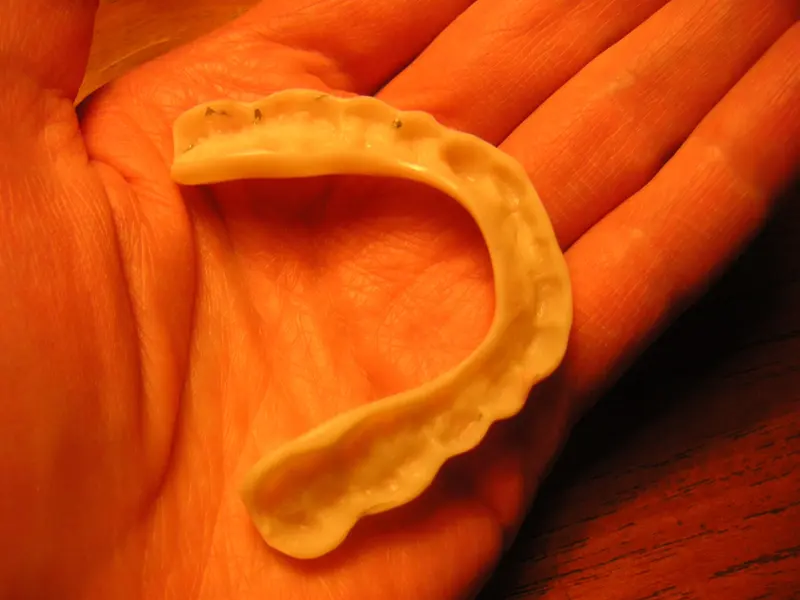
About night guards and splints
A night guard (or splint) is a removable appliance worn over the upper or lower teeth while you sleep. The NHS says a dentist may recommend one for teeth grinding: it protects the teeth from damage and can be made to fit precisely.
A guard protects the teeth, and the NHS also recommends tackling the causes of grinding - such as stress, poor sleep, alcohol, caffeine and smoking. The Oral Health Foundation lists a splint or night guard among treatments that may help jaw joint and muscle problems linked to grinding.
For grinding, the NHS describes guards made by a dentist to fit precisely over your teeth. Ask your dentist which type suits you rather than relying on a generic guard.
How it works
- Your dentist checks your teeth, bite and jaw
- Moulds or scans of your teeth are taken
- The guard is made to fit over your upper or lower teeth
- It is fitted and adjusted, and you are shown how to wear and clean it
Time, lifespan and cost
- Time needed
- Usually an appointment for moulds or scans and another to fit the guard.
- How long it lasts
- Varies with how heavily you grind; take it to check-ups so your dentist can check its fit and wear.
- On the NHS?
- Sometimes on the NHS. Custom-made appliances (other than sports guards) are listed under Band 3 NHS treatment in England (£332.10 from 1 April 2026), and a bite-raising appliance that is not laboratory-made is listed under Band 2 - where your dentist considers one clinically necessary. Otherwise night guards are private. NHS charges
Private cost
Private fees vary widely between practices and depend on the complexity of your case and the materials used, so we do not quote a typical price. Always ask for a written treatment plan with costs before you agree to treatment. (Source: NHS: How much NHS dental treatment costs)
Pros and cons
Pros
- Protects teeth and fillings from wear and breakage
- May ease jaw pain and morning headaches
- Custom-made to fit precisely
Cons
- Does not treat the causes of grinding, such as stress
- Needs regular cleaning and eventual replacement
- Usually private unless your dentist considers it clinically necessary
Aftercare
- Clean the guard as your dentist advises
- Keep it in its case when not in use
- Bring it to check-ups so the fit can be checked
Risks and side effects
- Jaw discomfort if the guard does not fit well
- Bacteria building up if it is not cleaned
Your dentist should explain the risks that apply to you before you agree to treatment.
Problems it can help with
Gums shrinking back to expose the roots can cause sensitivity and 'long' looking teeth. The causes and how to stop it getting worse.
Sharp twinges with cold, hot, sweet or acidic food are common. Why teeth become sensitive, what helps at home and when to see a dentist.
Grinding or clenching - often at night - can wear teeth, crack fillings and cause jaw pain and headaches. Causes, self-help and night…
Teeth that look shorter, thinner, more yellow or sensitive may be wearing away. Find out the causes - acid, grinding, brushing - and fixes.
Common questions
Will a night guard stop me grinding?
It protects your teeth, but grinding is often linked to stress, sleep problems, alcohol, caffeine or smoking, so tackling those matters too.
Is a night guard the same as a sports mouthguard?
No. Sports mouthguards are designed to cushion blows during sport; night guards protect against grinding. The NHS also treats them differently - sports guards are excluded from Band 3.
Can I get one on the NHS?
Possibly, if your dentist considers it clinically necessary. Ask about charges before treatment.
Sources we used
- NHS: Teeth grinding (bruxism)
- Oral Health Foundation: Jaw problems and headaches
- NHS: How much NHS dental treatment costs
- NHS dental charges from 1 April 2026 (poster, PDF)
Checked September 2026. Guidance changes, so always follow the advice of your own dental team. About our sources.