
About fillings
A filling replaces tooth tissue lost to decay, wear or damage, sealing the tooth so food and bacteria cannot get in and cause further disease. The two most common materials are tooth-coloured composite ('white fillings') and amalgam ('silver fillings'), a mixture of mercury, silver, tin and copper.
White fillings blend in and stick to the tooth, so less healthy tooth usually needs removing. They are hard enough for back teeth, but Bristol Dental School notes they can take longer to place and may need replacing more often than amalgam. The Oral Health Foundation says research shows amalgam usually lasts longer and resists wear better on back teeth, and that there is no reliable evidence amalgam fillings cause illness; its use is being phased down mainly for environmental reasons.
Your dentist will recommend a material based on the size and position of the cavity, your age and health, and your preference. On the NHS, a silver-coloured filling may be offered for a back tooth, with white fillings available where clinically necessary.
How it works
- The tooth is numbed with a local anaesthetic if needed
- Decay or damaged tooth is removed and the cavity cleaned and shaped
- For white fillings, the tooth is kept dry (sometimes with a rubber sheet), prepared with a gel and coated with a bonding layer
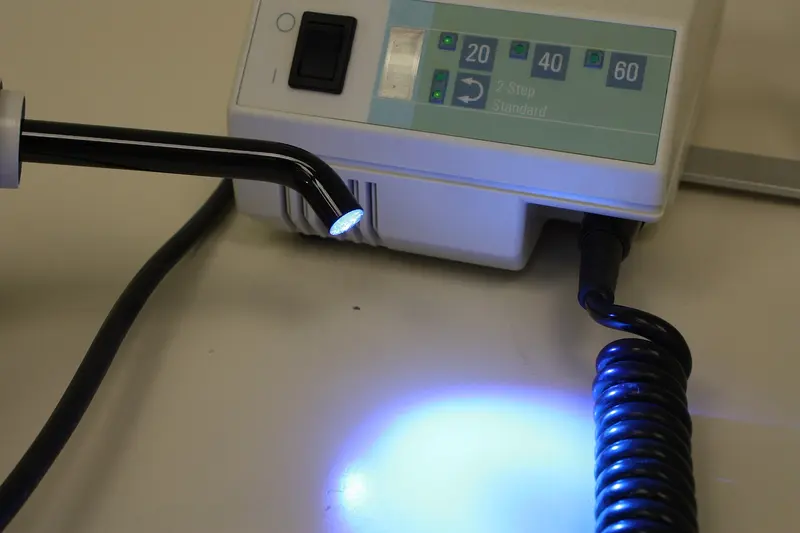
- The filling material is placed and set - white fillings are hardened with a blue light
- The filling is shaped, your bite checked and the surface polished
Time, lifespan and cost
- Time needed
- Depends on the size and number of fillings; white fillings generally take longer to place than amalgam because there are more stages.
- How long it lasts
- Bristol Dental School says a composite filling can last 5 to 7 years and sometimes 10 years or more; the Oral Health Foundation notes amalgam usually lasts longer. Size, position, your bite and how well you look after your teeth all make a difference.
- On the NHS?
- Available on the NHS. Fillings are a Band 2 NHS treatment in England (£76.60 from 1 April 2026) unless you are exempt. White fillings are available on the NHS when clinically necessary, for example on front teeth; for back teeth you may be offered amalgam, with white fillings as a private alternative. One urgent filling can be done within a Band 1 urgent appointment. NHS charges
Private cost
From £118 to from £219 for a small filling
Small silver (amalgam) filling from £118 (Bupa Dental Care Brigg) and from £219 (Bupa Dental Care London Bank); one-surface white filling on a back tooth from £180 (mydentist myoptions, England/Wales); large white filling from £382.50 (Bupa Dental Care London Bank).
Published starting prices from individual practice price lists, checked September 2026. These are not averages and your quote could be higher. Sources: Bupa Dental Care Brigg: Treatment prices, Bupa Dental Care London Bank: Treatment prices, mydentist: myoptions private dental care price list.
Private fees vary widely between practices and depend on the complexity of your case and the materials used, so we do not quote a typical price. Always ask for a written treatment plan with costs before you agree to treatment. (Source: Oral Health Foundation: White fillings)
Pros and cons
Pros
- Stops decay progressing and restores the tooth's function
- White fillings match the tooth colour and need less tooth removed
- Amalgam is strong, long-lasting and resistant to wear on back teeth
- Widely available on the NHS
Cons
- White fillings can take longer to place and may need replacing sooner
- Composite can roughen, discolour or chip over time
- Amalgam is silver-coloured and noticeable
- White fillings are not suitable in some situations - for example very large cavities, or where the tooth cannot be kept dry
Aftercare
- Avoid hot drinks and chewing on the numb side until the feeling returns
- Some sensitivity after a white filling is common; mention it to your dentist if it persists (Bristol Dental School says it should not last more than 2 weeks)
- Brush twice a day with fluoride toothpaste and clean between teeth to prevent new decay around the filling
Risks and side effects
- Sensitivity after treatment
- New decay around the edges of the filling
- Fillings chipping, wearing or falling out over time
- Irritation of the nerve inside the tooth - one reason dentists avoid replacing working fillings unnecessarily
Your dentist should explain the risks that apply to you before you agree to treatment.
Problems it can help with
Bad breath (halitosis) is very common and usually fixable at home. The main causes, what actually helps, and when to see a dentist or GP.
A tooth that has broken badly - especially after an accident - needs prompt dental care. What to do right now and what treatment may follow.
A small piece has broken off a tooth. Usually not serious, but worth getting checked. What to do now and how dentists repair chips.
A filling has fallen out, cracked or feels loose. How to protect the tooth until you are seen and what a dentist might do next.
Gums shrinking back to expose the roots can cause sensitivity and 'long' looking teeth. The causes and how to stop it getting worse.
Sharp twinges with cold, hot, sweet or acidic food are common. Why teeth become sensitive, what helps at home and when to see a dentist.
Grinding or clenching - often at night - can wear teeth, crack fillings and cause jaw pain and headaches. Causes, self-help and night…
Decay often starts silently and ends in holes, pain or infection. How it develops, the early warning signs and the treatments at each stage.
Toothache has many causes, from decay to a cracked tooth. How to ease the pain now, when to see a dentist and when it's an emergency.
Common questions
Should I have my silver fillings replaced with white ones?
Usually only when they are worn, broken or have decay underneath. The Oral Health Foundation says removing a working filling means extra drilling and loss of healthy tooth and can briefly release mercury vapour.
Is amalgam safe?
The Oral Health Foundation says extensive research shows amalgam is safe for most people and there is no reliable evidence it causes illness. Some countries restrict its routine use in children and in pregnant or breastfeeding people; your dentist will advise.
Can I buy a temporary filling kit?
Pharmacy kits can protect a tooth for a short time if a filling falls out, but they are only a stopgap until you see a dentist.
Sources we used
- NHS: Dental treatments
- NHS: How much NHS dental treatment costs
- NHS dental charges from 1 April 2026 (poster, PDF)
- Oral Health Foundation: White fillings
- Oral Health Foundation: Amalgam fillings
- Oral Health Foundation: Temporary fillings
- Bristol Dental School: White (composite) fillings
- Bupa Dental Care Brigg: Treatment prices
- Bupa Dental Care London Bank: Treatment prices
- mydentist: myoptions private dental care price list
Checked September 2026. Guidance changes, so always follow the advice of your own dental team. About our sources.