
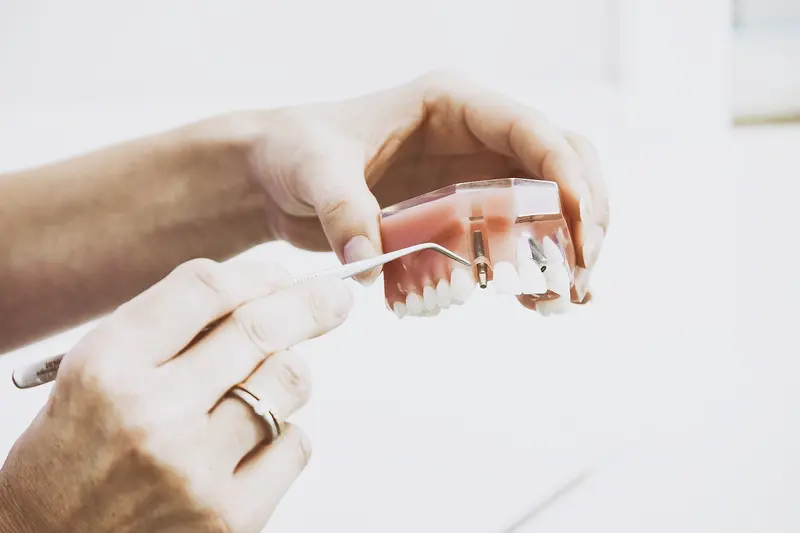
About dentures
Dentures are removable false teeth. Complete (full) dentures replace all the teeth in the upper or lower jaw; partial dentures fill gaps where some natural teeth remain, usually held in place by small clasps.
Plastic (acrylic) dentures are the most common. Metal-based (cobalt-chrome) partial dentures are thinner, lighter and more stable but need strong natural teeth to clip onto and usually cost more. Flexible dentures are made of a bendy plastic and are mainly used as partial dentures.
Dentures help with eating and speaking and can restore confidence. It takes a few weeks to get used to them, and they need adjusting or replacing over time as your gums and jawbone change shape.
How it works
- Your dentist assesses your mouth and takes putty moulds or a digital scan
- The dentures are made, which usually takes a few weeks
- The dentures are fitted and adjusted for comfort
- Immediate dentures can be made within a few days and fitted straight after extractions, but often need adjusting or replacing within a year as the gums heal
Time, lifespan and cost
- Time needed
- Usually a few weeks from first moulds to fitting; immediate dentures can be made within days.
- How long it lasts
- The Oral Health Foundation says dentures often need replacing every 5 to 8 years to keep fitting and working well; regular check-ups help.
- On the NHS?
- Available on the NHS. Dentures are a Band 3 NHS treatment in England (£332.10 from 1 April 2026) unless you are exempt. Minor adjustments are Band 1, and repairs to NHS dentures are free - but if they cannot be repaired you pay for new ones. Paying privately can widen the choice of materials. NHS charges
Private cost
Costs vary a lot depending on the type of denture and material, so we do not quote a typical price. Ask for a written estimate. (Source: NHS: Dentures (false teeth))
Pros and cons
Pros
- Can replace any number of teeth
- Removable for cleaning
- Available on the NHS
- Immediate dentures avoid a gap after extractions
Cons
- Can feel bulky and take weeks to get used to
- Can slip, click or feel loose, particularly as the mouth changes
- Need removing and cleaning daily
- Need relining or replacing as the mouth changes
- Poorly designed partials can put pressure on remaining teeth and gums
Aftercare
- Brush your gums, tongue and any remaining teeth with fluoride toothpaste morning and evening
- Remove and brush the dentures with soft soap or washing-up liquid morning and evening - not toothpaste, which can damage them
- Clean them over a bowl of water or a towel in case you drop them
- Take them out at night unless your dentist advises otherwise, keeping them in water or a denture-cleaning solution
- Start with soft food cut into small pieces while you adapt
Risks and side effects
- Sore spots and infections if dentures are not cleaned or adjusted
- Difficulty eating and speaking if they no longer fit
- Gum disease or decay in remaining teeth from trapped food
- A choking risk if worn while sleeping
Your dentist should explain the risks that apply to you before you agree to treatment.
Problems it can help with
An adult tooth knocked out can often be saved if you act within the hour. Step-by-step first aid, plus what happens at the dentist.
Gaps from lost teeth can affect eating, speech and confidence. Compare dentures, bridges and implants, and why the gap itself matters.
Teeth that look shorter, thinner, more yellow or sensitive may be wearing away. Find out the causes - acid, grinding, brushing - and fixes.
Compare it with the alternatives
Implants vs bridges vs dentures
The three main ways to replace missing teeth compared: fixed or removable, effect on other teeth, treatment…
Common questions
Should I sleep in my dentures?
Usually not. The NHS advises removing them at night unless your dentist recommends otherwise, to reduce the risk of infection and decay and because of a choking risk.
When should I see a dentist about my dentures?
If they click when you talk, slip or feel loose, cause pain, are worn or broken, or you notice very red or bleeding gums or bad breath.
Are NHS denture repairs free?
Yes - in England you do not pay for repairs to NHS dentures, but if they cannot be repaired you will pay for a new set.
Sources we used
- NHS: Dentures (false teeth)
- Oral Health Foundation: Dentures
- Oral Health Foundation: Partial dentures
- NHS: How much NHS dental treatment costs
- NHS dental charges from 1 April 2026 (poster, PDF)
Checked September 2026. Guidance changes, so always follow the advice of your own dental team. About our sources.