
TePe
TePe Bridge & Implant Floss
Pre-cut spongy floss with stiff ends that thread under wires, bridges and around implants – handy for anyone with fixed braces.
Features & who it suits
The three main ways to replace missing teeth compared: fixed or removable, effect on other teeth, treatment time, NHS availability and longevity.
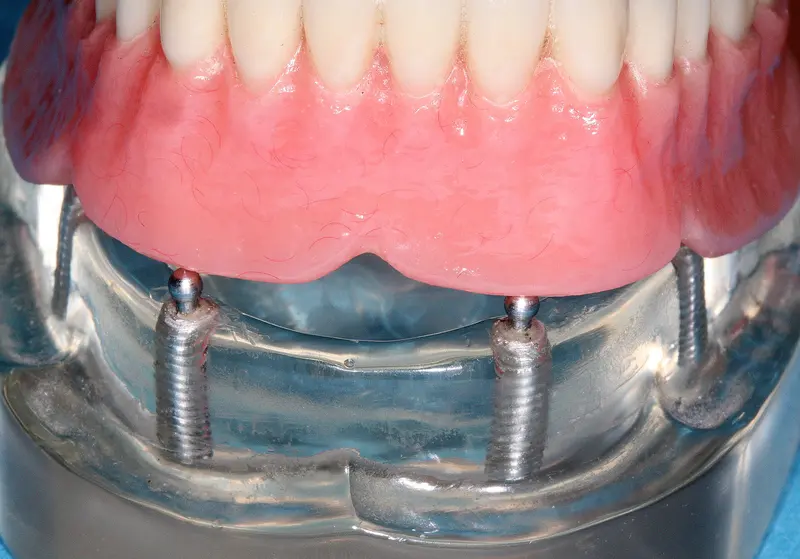
If you have lost one or more teeth, the main options are dental implants, bridges and dentures - and leaving the gap is also a legitimate choice. Each has different effects on your remaining teeth, your wallet and your daily routine.
The best option depends on how many teeth are missing and where, the health of your neighbouring teeth, gums and jawbone, your general health and your preferences. Your dentist should talk you through all the suitable options.
| Feature | Dental implants | Bridges | Dentures |
|---|---|---|---|
| Fixed or removable | Fixed. | Fixed. | Removable. |
| Teeth replaced | One, several or a full arch. | One or a small number. | Any number, from one tooth to a full set. |
| Effect on neighbouring teeth | None - stands alone in the bone. | Conventional bridges need neighbouring teeth cut down; resin-bonded bridges need little or no drilling. | Partial dentures clip onto remaining teeth; poorly designed ones can put pressure on them. |
| Surgery | Yes - the implant is placed in the jawbone. | No. | No. |
| Time to complete | Months - healing usually takes around four months before the final tooth. | 2 to 3 visits once the gum has healed (often around six months after an extraction). | A few weeks; immediate dentures within days. |
| Cleaning | Like natural teeth, plus careful interdental cleaning around the implant. | Special floss or aids to clean under the false tooth. | Removed and cleaned morning and evening; out at night. |
| How long it lasts | Often a very long time with good care, but no lifetime guarantee. | Conventional bridges can last over 10 years with good care. | Often replaced every 5 to 8 years as the mouth changes. |
| NHS availability | Rarely - usually private. | Yes, Band 3 (£332.10 from April 2026). | Yes, Band 3 (£332.10 from April 2026); repairs to NHS dentures are free. |
| Main downsides | Surgery, time, cost; needs suitable bone; risk of peri-implantitis. | Irreversible preparation of supporting teeth (conventional); resin-bonded bridges can debond. | Can feel bulky or loose; take time to get used to; need replacing. |
Dentures are the most flexible option and suit people missing several teeth or wanting to avoid surgery; they are available on the NHS.
A bridge can be a good fixed option for one or two missing teeth when the neighbouring teeth are strong and healthy - especially a resin-bonded bridge where little drilling is needed. It is also available on the NHS where appropriate.
Implants offer a fixed tooth that does not rely on neighbouring teeth and can stabilise dentures, but they involve surgery, take months and are usually private. If you are considering treatment abroad, read the General Dental Council's advice first.
Some links may be affiliate links.
Pre-cut spongy floss with stiff ends that thread under wires, bridges and around implants – handy for anyone with fixed braces.
Classic straight interdental brushes in colour-coded sizes. A mixed pack is a practical way to find which sizes suit your gaps –…
A rechargeable, cordless water flosser that is easier to store and travel with than a countertop unit, at the cost of a smaller…
Waterpik's countertop model with the widest range of settings and tips. A water flosser can make cleaning around braces, bridges…
Checked September 2026. Guidance changes, so always follow the advice of your own dental team. About our sources.