
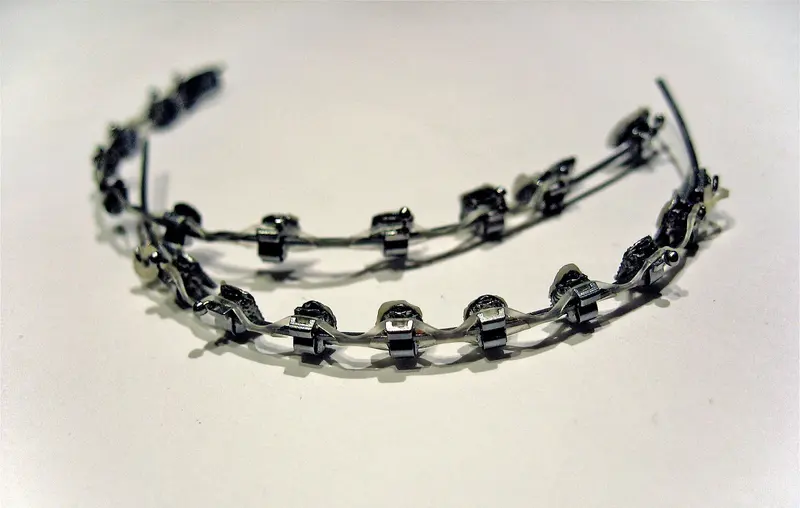
About metal braces
Fixed metal braces are the classic 'train track' brace. Small metal brackets are bonded to the front of each tooth and joined by a wire that applies gentle, continuous pressure to move the teeth. They remain the most popular type of orthodontic appliance and are the type most commonly used on the NHS.
Because they are fixed in place, metal braces can carry out a wide range of tooth movements, including complex corrections of the bite, and they do not rely on you remembering to wear them. The trade-offs are that they are visible, take extra effort to clean around, and need regular adjustment appointments.
Treatment is normally planned by an orthodontist after a full assessment with X-rays, photographs and moulds or scans, and it always finishes with retainers to stop the teeth moving back.
How it works
- Assessment: your teeth and jaws are examined, and X-rays, photographs and moulds or scans are taken
- If space is needed, any teeth to be removed are usually taken out by your regular dentist first
- Metal brackets are bonded to each tooth with dental adhesive
- A wire is threaded through the brackets and held with small elastic rings (modules), which can come in different colours
- You return every few weeks for adjustments as the teeth gradually move
- The brace is removed and retainers are fitted to hold the new positions
Time, lifespan and cost
- Time needed
- Usually 1 to 2 years for a fixed brace, with appointments every 4 to 10 weeks (often 6 to 8 weeks). Simple straightening of the front teeth can occasionally be quicker; complex problems can take longer.
- How long it lasts
- The straightening is only as lasting as your retention: teeth tend to relapse without retainers, and the British Orthodontic Society advises long-term retainer wear.
- On the NHS?
- Sometimes on the NHS. Free on the NHS for under-18s whose orthodontic need is high enough, assessed using the Index of Orthodontic Treatment Need (IOTN); there can be a long wait to see an NHS orthodontist. Adults usually pay privately, although NHS treatment is possible where need is sufficient, for example complex cases involving jaw surgery. NHS charges
Private cost
Private orthodontic fees vary widely depending on how complex the problem is, where you live and the experience of the orthodontist, according to the British Orthodontic Society, so we do not quote a typical price. Ask for a written quotation after your consultation. (Source: British Orthodontic Society: Patient FAQs)
Pros and cons
Pros
- Can correct a wide range of problems, including complex bite issues
- Works full-time without relying on you to wear it
- The standard NHS brace for under-18s who qualify
- Coloured elastic rings can be chosen by those who want to personalise them
Cons
- Clearly visible
- Teeth are usually sore for a few days after fitting and adjustments
- Harder to clean around, which raises the risk of decay and gum problems if hygiene slips
- Hard, sticky and chewy foods and chewing gum need to be avoided
- Needs regular appointments over a long period
Aftercare
- Brush in the morning, at night and after meals with fluoride toothpaste
- Use interdental brushes daily to clean between teeth and under the wire
- Avoid sugary foods and drinks, hard or sticky foods and chewing gum; cutting food into smaller pieces can help
- Keep seeing your regular dentist for check-ups during treatment
- Your orthodontist may recommend a high-fluoride toothpaste
Risks and side effects
- Tooth decay and white marks around brackets if cleaning is poor
- Gum inflammation, and gum recession if teeth are moved outside the bone
- Minor changes to the tooth roots, which happen to some degree with all brace work
- Relapse of the teeth if retainers are not worn
- Broken brackets or wires needing extra appointments
Your dentist should explain the risks that apply to you before you agree to treatment.
Problems it can help with
Twisted, tilted or uneven teeth are very common. Here is why they happen, when they matter, and the realistic ways to straighten them.
When some upper teeth bite inside the lower teeth instead of outside. How crossbites affect the jaw and how they are corrected.
When there is not enough space for every tooth, teeth overlap and twist. Learn how crowding is assessed and the options for making room.
Gaps between teeth can be harmless, a sign of missing teeth, or occasionally a sign of gum disease. How to tell and what can close them.
When the front or side teeth do not meet even with the back teeth closed. Common causes, including habits, and what can be done.
Top teeth that stick out or overlap the bottom ones too deeply. What counts as normal, why it matters, and how braces can help.
When the lower front teeth sit in front of the upper ones. Why it happens, why early assessment matters, and the treatment options.
Compare it with the alternatives
Braces vs clear aligners
Fixed braces and clear aligners compared on visibility, what they can fix, comfort, cleaning, NHS…
Metal vs ceramic braces
Traditional metal braces and tooth-coloured ceramic braces compared: appearance, durability, staining, what…
Common questions
Do braces hurt?
Fitting the brackets should not hurt, but teeth usually ache for a few days after the brace is fitted or adjusted. Soft food and over-the-counter painkillers help. Contact your orthodontist if pain lasts more than a few days.
Should I tell the orthodontist about old injuries?
Yes. The NHS advises telling the orthodontist if a front tooth has been knocked or damaged in the past, as it may need extra care during treatment.
Will I need a retainer afterwards?
Almost certainly. The British Orthodontic Society says nearly every patient needs retainers after braces, and that you should only start treatment if you are happy to wear them to keep the result.
Who can fit braces?
Any GDC-registered dentist can provide orthodontics if they are competent to do so, but only those on the GDC's specialist list can call themselves specialist orthodontists; they have at least three years of extra training. You can check registration on the GDC register.
Useful at home
Products that can help with day-to-day care alongside this treatment. Ask your dental team what suits you. Some links may be affiliate links.
Colgate Fluorigard Daily Rinse (alcohol free)
A fluoride rinse focused on preventing decay rather than freshening breath. Used at a separate time from brushing – after lunch…
OPRO Gold mouthguard for braces
A self-fit sports mouthguard shaped to sit over fixed braces. Braces can change fit over time, so check with your orthodontist –…
Philips Sonicare ProtectiveClean 6100 (HX6871)
A sonic brush with three modes and three intensities, including a gum-care mode. Philips says it is suitable for use with…
TePe Bridge & Implant Floss
Pre-cut spongy floss with stiff ends that thread under wires, bridges and around implants – handy for anyone with fixed braces.
Sources we used
- NHS: Braces
- British Orthodontic Society: Treatment and brace types
- British Orthodontic Society: Patient FAQs
- British Orthodontic Society: Retainers
- British Orthodontic Society: Orthodontics for children and teens
- British Orthodontic Society: Find an orthodontist
- General Dental Council: Search the register
- Oral Health Foundation: Orthodontic treatment
- Oral Health Foundation: Safe Smiles: the basics of orthodontics
- Oral Health Foundation: Safe Smiles: the dangers of DIY orthodontics
- NHS England: Orthodontic assessment quick reference guide (PDF)
Checked September 2026. Guidance changes, so always follow the advice of your own dental team. About our sources.